
Columbus Historic Riverfront Industrial District in Columbus Georgia
History on Columbus RiverFront
in the Historic Industrial District
in Columbus Georgia
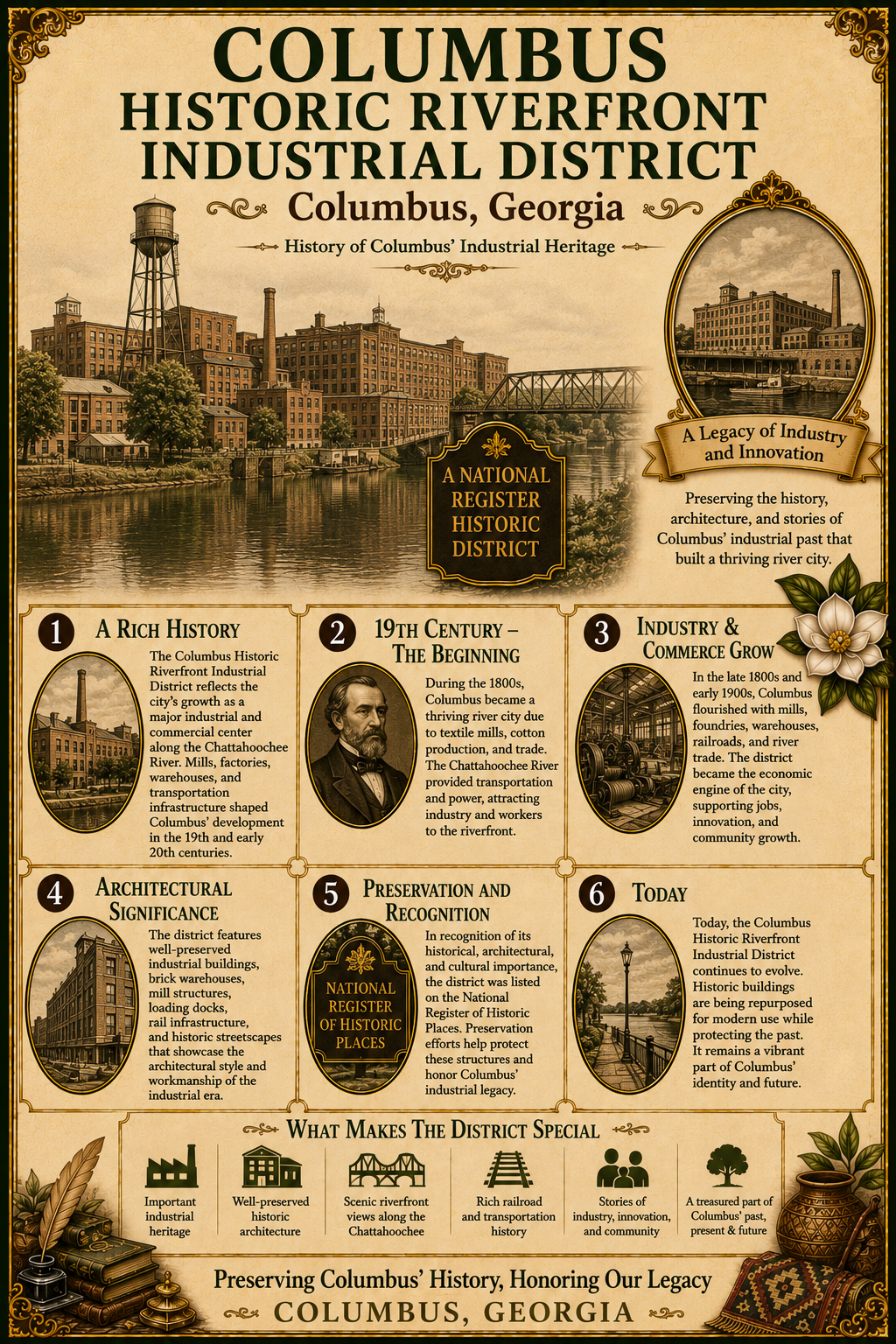
Columbus Historic Riverfront Industrial District in Columbus Georgia
History of Columbus’ Industrial Heritage
The Columbus Historic Riverfront Industrial District preserves one of Georgia’s most significant industrial landscapes
along the Chattahoochee River. The district showcases the city’s manufacturing, transportation, and commercial history
while celebrating the people and industries that transformed Columbus into a thriving economic center.
A Legacy of Industry and Innovation
The Columbus Historic Riverfront Industrial District preserves the history, architecture, and stories of Columbus’ industrial past that helped
build a thriving river city. Today, the district remains an important reminder of the community’s innovation, craftsmanship, and economic growth.
A National Register Historic District
The district is recognized on the National Register of Historic Places, honoring its historical, architectural,
and cultural significance while helping ensure its preservation for future generations.
1. A Rich History
The Columbus Historic Riverfront Industrial District reflects the city’s growth as a major industrial and
commercial center along the Chattahoochee River. Mills, factories, warehouses, and transportation
infrastructure shaped Columbus’ development throughout the nineteenth and early twentieth centuries.
2. 19th Century – The Beginning
During the 1800s, Columbus became a thriving river city because of its textile mills,
cotton production, manufacturing, and trade.The Chattahoochee River provided transportation,
water power, and access to markets, attracting industries, businesses, and workers to the riverfront.
3. Industry & Commerce Grow
In the late 1800s and early 1900s, Columbus flourished with textile mills, foundries, warehouses,
railroads, and river commerce. The district became the economic engine of the city,
creating jobs, encouraging innovation, and supporting long-term community growth.
4. Architectural Significance
The district features many well-preserved industrial buildings, brick warehouses,
mill structures, loading docks, railroad infrastructure, and historic streetscapes.
These landmarks showcase the craftsmanship, engineering, and architectural style of Georgia’s industrial era.
5. Preservation and Recognition
In recognition of its historical, architectural, and cultural importance,
the Columbus Historic Riverfront Industrial District was listed on the National Register of Historic Places.
Preservation efforts help protect these important structures while honoring Columbus’ industrial heritage for future generations.
6. Today
Today, the Columbus Historic Riverfront Industrial District continues to evolve.
Historic buildings have been restored and repurposed for businesses, museums,
restaurants, offices, and residential spaces while preserving their historic character.
he district remains a vibrant part of Columbus’ identity and future.
What Makes the District Special
Important industrial heritage
Well-preserved historic architecture
Scenic riverfront views along the Chattahoochee River
Rich railroad and transportation history
Stories of industry, innovation, and community
A treasured part of Columbus’ past, present, and future
Preserving Columbus’ History, Honoring Our Legacy
COLUMBUS, GEORGIA
The History of the Columbus Georgia
on the RiverFront Industrial District.
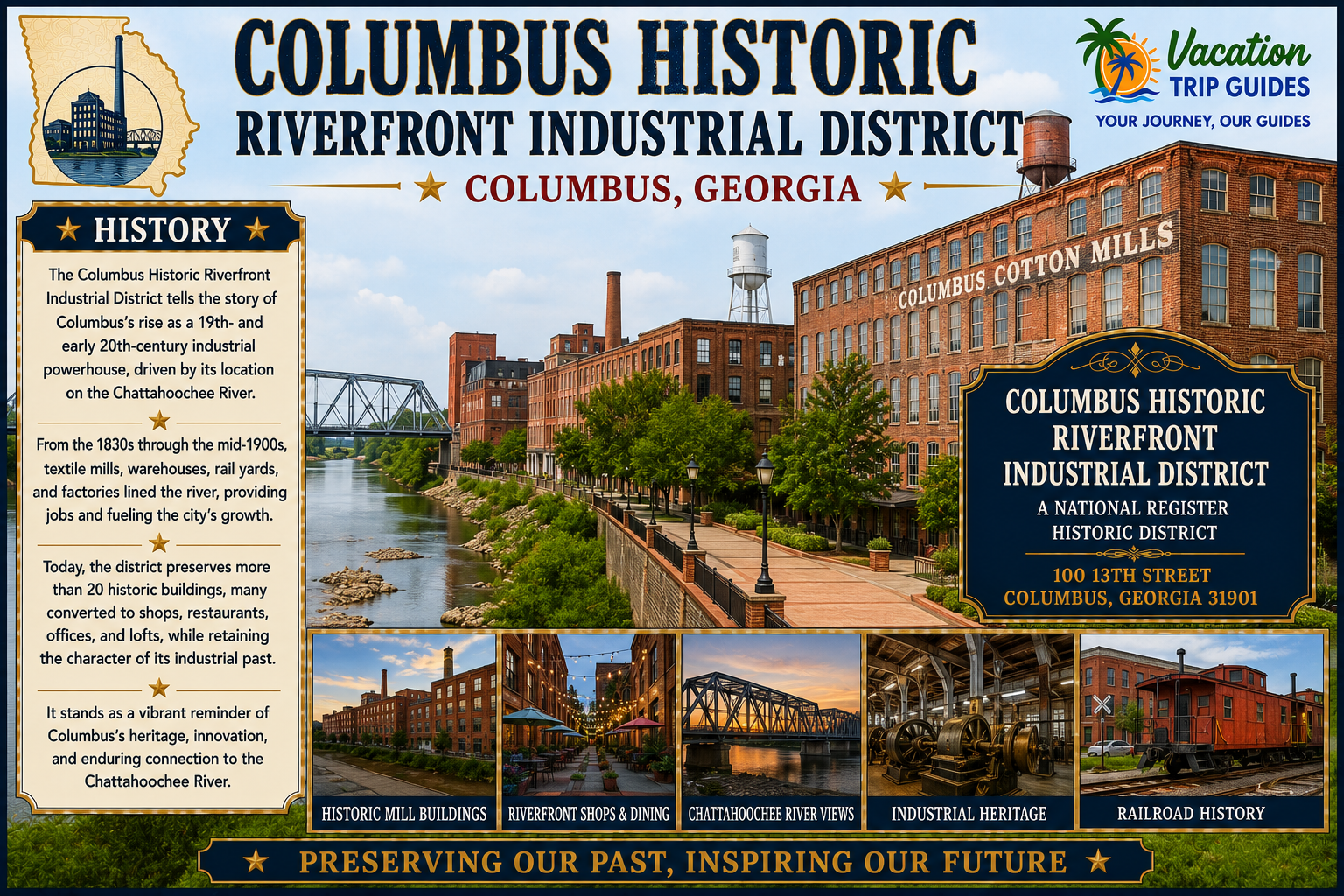
COLUMBUS HISTORIC RIVERFRONT INDUSTRIAL DISTRICT
Columbus, Georgia
HISTORY
The Columbus Historic Riverfront Industrial District tells the story of Columbus’s rise as a 19th- and
early 20th-century industrial powerhouse, driven by its strategiclocation along the Chattahoochee River.
From the 1830s through the mid-1900s, textile mills, warehouses, rail yards, and factories
lined the river, providing thousands of jobs and fueling the city’s economic growth.
Today, the district preserves more than 20 historic buildings, many of which have been restored and converted
into shops, restaurants, offices, apartments, and lofts while maintaining their historic industrial character.
The district stands as a vibrant reminder of Columbus’s rich heritage, innovation,
and enduring connection to the Chattahoochee River, making it one of Georgia’s
most important historic destinations. Columbus Historic Riverfront Industrial District
A National Register Historic District
Address:
100 13th Street
Columbus, Georgia 31901
Featured Highlights
Historic Mill Buildings
Riverfront Shops & Dining
Chattahoochee River Views
Industrial Heritage
Railroad History
Vacation Trip Guides
Your Journey, Our Guides
PRESERVING OUR PAST, INSPIRING OUR FUTURE
Walking Columbus Georgia Riverwalk & Historic Downtown (2026)
Color me in.
