
Chief Vann House – Chatsworth Georgia
About Chief Vann House in Chatsworth Georgia
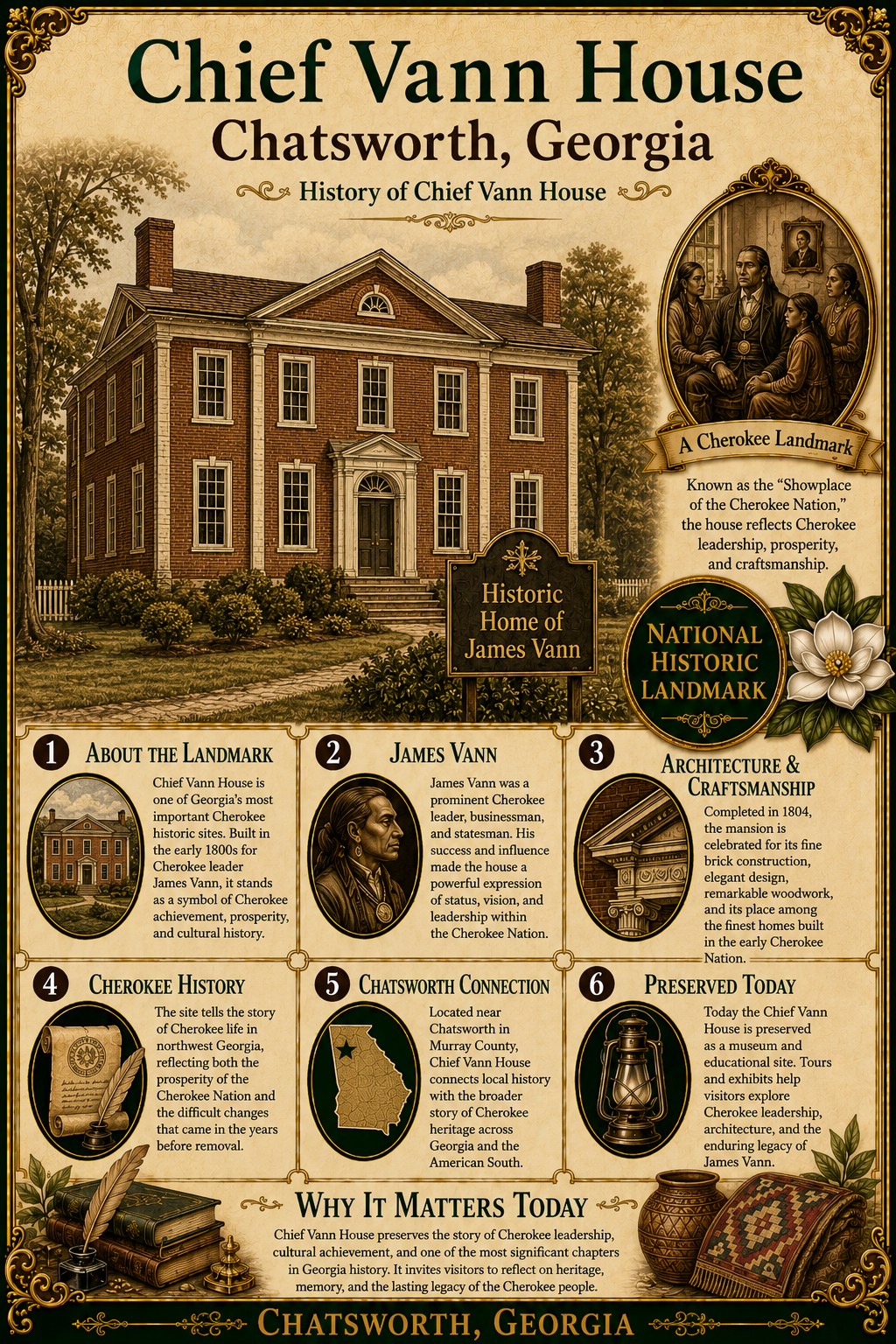
Chief Vann House
Chatsworth, Georgia
History of the Chief Vann House
The Chief Vann House is one of Georgia’s most important Cherokee historic landmarks.
Located near Chatsworth in Murray County, the stately red-brick mansion was constructed in 1804 for James Vann,
an influential Cherokee leader, businessman and statesman. It was the first brick residence built within the
Cherokee Nation and became known as the “Showplace of the Cherokee Nation.”
James Vann became a powerful figure in the Cherokee Nation during the late eighteenth and early nineteenth centuries.
He operated businesses, ferries, taverns and trading enterprises while establishing a large plantation in what is now northwest Georgia.
His wealth and influence were reflected in the size, architecture and craftsmanship of his family home.
The two-story Federal-style mansion was considered one of the finest homes in the Cherokee Nation.
Its elegant brick exterior, detailed woodwork, hand-carved decorations and remarkable
cantilevered staircase demonstrated the skill of the craftspeople who constructed it.
The history of the property also includes the labor of enslaved African Americans who lived and worked on James Vann’s plantation.
The estate became one of the largest and most prosperous plantations in the Cherokee Nation,
and historical accounts connect the property with the experiences of enslaved people seeking freedom.
James Vann was killed in 1809. Ownership of the mansion and plantation then passed to his son, Joseph Vann, who also became
a prominent Cherokee leader and businessman. Joseph expanded the family’s wealth and continued living at the
property until the Vann family was forced from the home during the period of Cherokee removal.
During the 1830s, the State of Georgia seized Cherokee lands and distributed them to white settlers.
The Vann family and thousands of other Cherokee people were ultimately forced west during the removal era associated with the Trail of Tears.
The house remains an important place for learning about Cherokee leadership, cultural achievement, land loss and forced removal.
Architecture and Craftsmanship
Completed in 1804, the Chief Vann House is an outstanding example of early nineteenth-century Federal-style architecture.
Its symmetrical brick façade, tall windows, central entrance and carefully crafted interior reflected the Vann family’s social position and prosperity.
Inside, visitors can see period rooms, historic furnishings, decorative woodwork and the home’s famous floating or cantilevered staircase.
These architectural details help illustrate the craftsmanship and refined domestic life found within the early Cherokee Nation.
Preservation of the Historic House
The Chief Vann House was restored and opened as a state-operated historic house museum in 1958.
It was listed on the National Register of Historic Places in 1969 and continues to be protected as an important Cherokee heritage site.
Today, the property is operated as the Chief Vann House State Historic Site. Guided tours introduce visitors to the Vann family,
the Cherokee Nation and the events surrounding the Trail of Tears. The historic site also includes an interpretive center,
reconstructed or preserved outbuildings, trails and exhibits related to plantation life and Cherokee history.
Why the Chief Vann House Matters Today
The Chief Vann House preserves the story of Cherokee leadership, prosperity,
family life and cultural achievement during a defining period in Georgia history. It also provides an important setting for
understanding slavery, land seizure and the forced removal of the Cherokee people from their ancestral homeland.
The mansion stands as a lasting reminder of the Cherokee Nation’s strength and accomplishments, as well as the hardships its people endured.
Through preservation, exhibits and educational tours, the site encourages visitors to reflect on
heritage, memory and the continuing legacy of the Cherokee people.
Visitor Highlights
Historic Brick Mansion
Tour one of the oldest surviving homes associated with the Cherokee Nation.
Period Interiors
See historic furnishings, detailed woodwork and the mansion’s remarkable staircase.
Cherokee History
Learn about James Vann, Joseph Vann and the wider history of the Cherokee Nation.
Trail of Tears Interpretation
Explore exhibits explaining the events that led to Cherokee removal.
Historic Grounds
Walk through the property and view buildings and landscapes connected with the former plantation.
Chief Vann House State Historic Site
Location: Chatsworth, Georgia
County: Murray County
Historic construction date: 1804
Historic owner: James Vann
Historic distinction: First brick residence in the Cherokee Nation
Preserving Cherokee History for Future Generations
Vacation Trip Guides — Your Journey, Our Guides
About the History of Chief Vann House is in Chatsworth Georgia
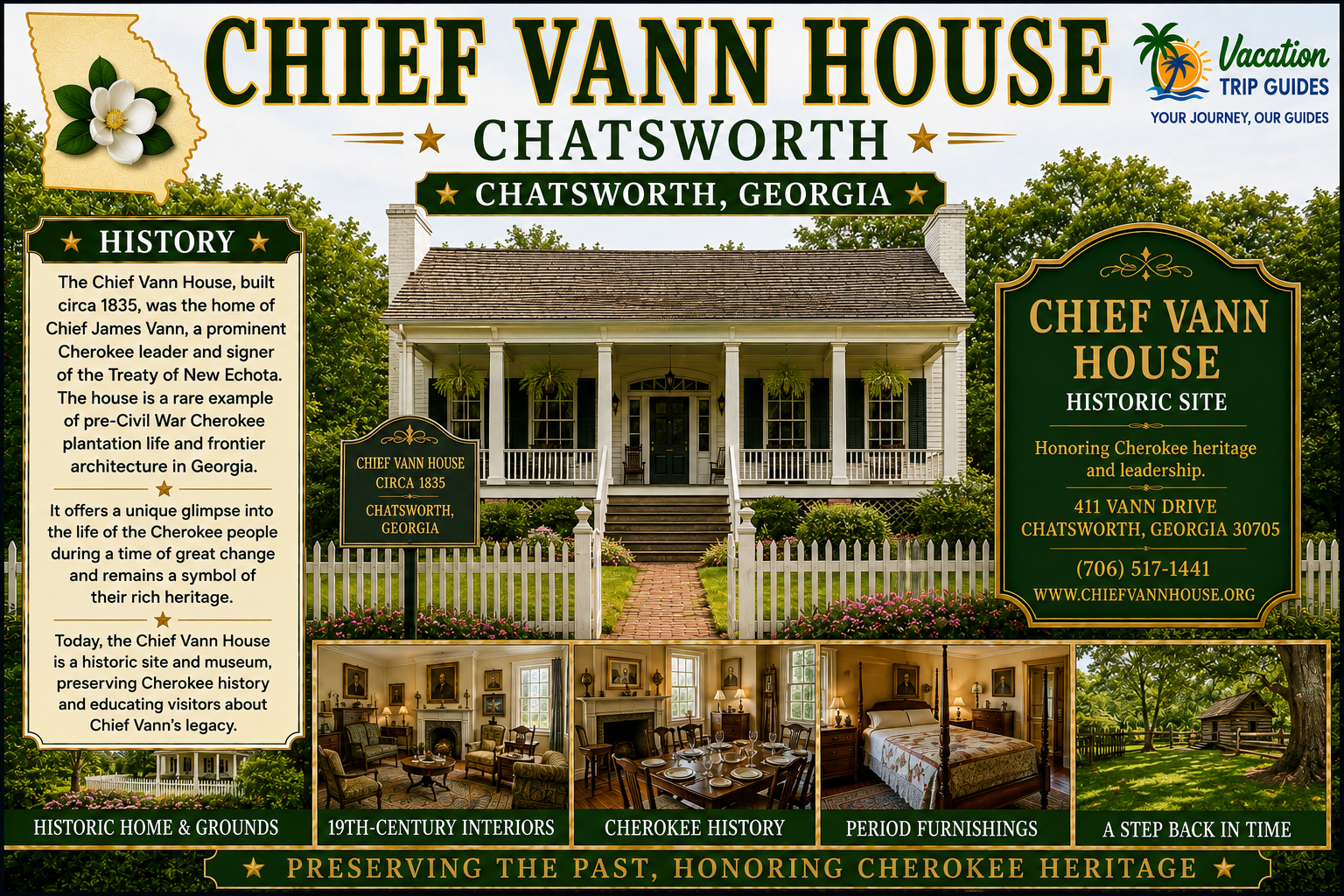
CHIEF VANN HOUSE
Chatsworth, Georgia
History
The Chief Vann House, built circa 1835, was the home of Chief James Vann,
a prominent Cherokee leader and signer of the Treaty of New Echota.
The house is a rare example of pre-Civil War Cherokee plantation life and frontier architecture in Georgia.
It offers visitors a unique glimpse into the lives of the Cherokee people during a time of great change
and remains an important symbol of their rich heritage.
Today, the Chief Vann House is operated as a historic site and museum.
It preserves Cherokee history and educates visitors about Chief Vann’s life, leadership and legacy.
Chief Vann House Historic Site
Honoring Cherokee heritage and leadership
Address:
411 Vann Drive
Chatsworth, Georgia 30705
Phone:
(706) 517-1441
Website:
www.chiefvannhouse.org
Visitor Highlights
Historic Home and Grounds
Explore the preserved residence, landscaped property and surrounding historic grounds.
19th-Century Interiors
Tour rooms arranged to represent domestic life during the early nineteenth century.
Cherokee History
Learn about Cherokee culture, leadership and the important history of the Cherokee Nation in Georgia.
Period Furnishings
View furniture, household objects and decorative pieces representing the historic period.
A Step Back in Time
Experience a meaningful historic setting that helps visitors understand the people and events connected to the property.
Preserving the Past, Honoring Cherokee Heritage
Vacation Trip Guides — Your Journey, Our Guides
Hidden Gem Georgia: Chief Vann House
Color me in image on Chief Vann House Historic District
