
College Hill Historic District In Augusta Georgia
The History of College Hill
In Augusta Georgia
College Hill Historic District – Augusta, Georgia
History of College Hill Historic District
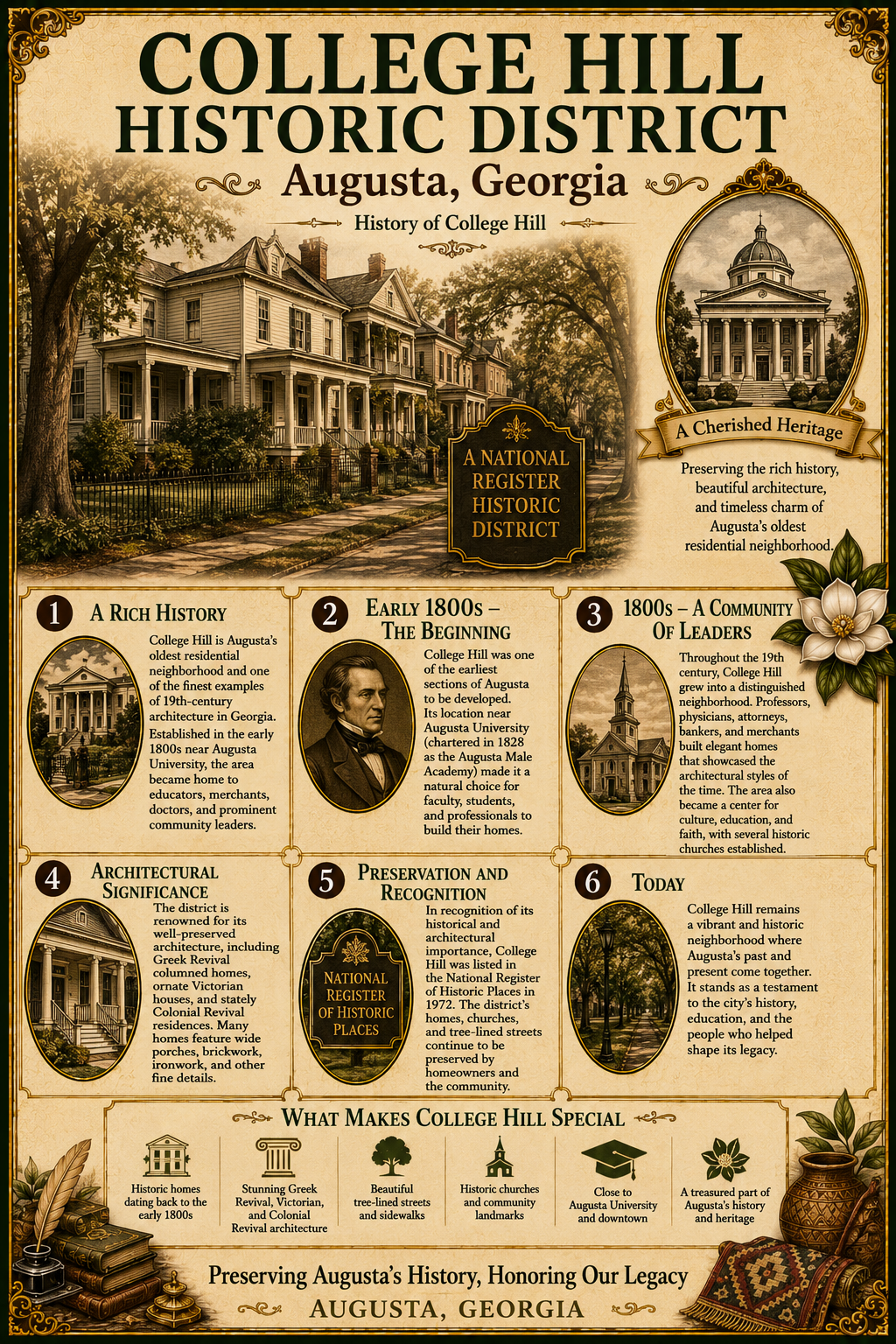
College Hill Historic District is one of Augusta, Georgia’s oldest and most historically significant residential neighborhoods. Located just west of downtown and adjacent to Augusta University, the district reflects more than two centuries of architectural beauty, educational heritage, and community pride.
A Cherished Heritage
College Hill Historic District has long been recognized for preserving Augusta’s rich history, beautiful architecture, and timeless Southern charm. The neighborhood remains one of Georgia’s finest examples of 19th-century residential development and continues to celebrate the city’s cultural and academic legacy.
A National Register Historic District
College Hill Historic District was listed on the National Register of Historic Places in 1972 because of its outstanding historical and architectural significance. Today, it remains one of Augusta’s most treasured historic neighborhoods.
1. A Rich History
College Hill is Augusta’s oldest residential neighborhood and one of the finest collections of nineteenth-century architecture in Georgia. Established during the early 1800s near Augusta University (originally Augusta Male Academy), the neighborhood quickly became home to professors, physicians, merchants, attorneys, and civic leaders who helped shape the city’s future.
2. Early 1800s – The Beginning
College Hill was among the first neighborhoods developed outside Augusta’s original downtown area. Its close proximity to Augusta University, founded in 1828 as the Augusta Male Academy, made it an attractive place for educators, students, and professionals to establish elegant homes and thriving communities.
3. 1800s – A Community of Leaders
Throughout the nineteenth century, College Hill flourished into one of Augusta’s most distinguished neighborhoods. Faculty members, doctors, bankers, lawyers, merchants, and church leaders built impressive residences while creating a center for education, faith, and civic leadership that influenced generations.
4. Architectural Significance
College Hill Historic District is celebrated for its remarkable collection of historic homes featuring:
- Greek Revival architecture
- Victorian homes
- Colonial Revival residences
- Decorative ironwork
- Wide front porches
- Brick sidewalks
- Mature tree-lined streets
- Beautiful historic churches
The district showcases the craftsmanship and architectural excellence that made Augusta one of the South’s most elegant cities.
5. Preservation and Recognition
Recognizing its architectural importance, College Hill was officially added to the National Register of Historic Places in 1972. Preservation efforts by homeowners, neighborhood organizations, and the community continue to protect the district’s historic homes, churches, landscapes, and streets for future generations.
6. Today
Today, College Hill Historic District remains a vibrant residential neighborhood where Augusta’s past and present come together. Visitors enjoy walking beneath centuries-old trees, admiring beautifully restored homes, exploring nearby Augusta University, and experiencing one of Georgia’s most historic communities.
What Makes College Hill Special
- Historic homes dating back to the early 1800s
- Beautiful Greek Revival, Victorian, and Colonial Revival architecture
- Scenic tree-lined streets and sidewalks
- Historic churches and neighborhood landmarks
- Walking distance to Augusta University and downtown Augusta
- One of Augusta’s most treasured historic districts
- Listed on the National Register of Historic Places
- Rich educational, architectural, and cultural heritage
Why It Matters Today
College Hill Historic District preserves an important chapter of Augusta’s history while providing a living example of nineteenth-century neighborhood planning and architecture. Its beautifully preserved homes, historic churches, and academic connections make it one of Georgia’s most significant historic districts. Visitors and residents alike continue to enjoy its unique blend of history, education, architecture, and Southern hospitality.
College Hill Historic District
Augusta, Richmond County, Georgia
Vacation Trip Guides
Your Journey, Our Guides
About the Historic District
in College Hill
Augusta Georgia
Chieftains Museum/Major Ridge Home
Rome, Georgia
History of Chieftains
Chieftains Museum/Major Ridge Home is one of Georgia’s most significant Cherokee historic sites.
Located beside the Oostanaula River in Rome, the property preserves the former home and farm of
Major Ridge, an influential Cherokee warrior, statesman and political leader.
At the center of the present house is a two-story dogtrot-style log structure that served as the Ridge family’s home.
Major Ridge moved to the property around 1819 and established a farm of approximately 200 acres.
Later owners expanded and altered the building, creating the larger white frame residence visitors see today.
Major Ridge and Cherokee Leadership
Major Ridge was born around 1771 and rose from being a respected warrior to becoming an
important leader within the Cherokee Nation. He supported education, economic development and selected aspects of
European-American culture while working to protect Cherokee sovereignty and land.
The Ridge family became one of the most prominent Cherokee families of the early nineteenth century.
Major Ridge’s son, John Ridge, was also a Cherokee political leader, while his cousin Elias Boudinot became the first
editor of the Cherokee Phoenix newspaper. The home reflects the rapid changes experienced by Cherokee families during this period.
The property included agricultural land, family living spaces and a ferry operation that helped people cross the Oostanaula River.
The Treaty of New Echota
During the 1830s, the United States and Georgia increased pressure on the Cherokee Nation to surrender
its remaining land in the Southeast. Most Cherokee citizens, including Principal Chief John Ross, opposed removal.
Major Ridge eventually believed that removal had become unavoidable. In December 1835, he joined
John Ridge, Elias Boudinot and other members of a minority group known as the Treaty Party in signing the Treaty of New Echota.
The treaty surrendered the Cherokee Nation’s remaining southeastern lands in exchange for territory west of the Mississippi River.
The Cherokee National Council had not authorized the signers to make the agreement, and most Cherokee people rejected it.
Nevertheless, the United States Senate ratified the treaty in 1836. It was later used to justify the forced removal of
thousands of Cherokee people during the Trail of Tears. Major Ridge, John Ridge and Elias Boudinot were killed on June 22, 1839,
after the removal. Their deaths were connected to Cherokee law prohibiting unauthorized sales of the Nation’s communal land.
Architecture and Home Life
Although the building now appears to be a large nineteenth-century frame house, its historic core
is the earlier log home occupied by the Ridge family. Numerous additions made after Major Ridge left the property
illustrate different periods of Northwest Georgia architecture. The house and surrounding grounds help visitors understand Cherokee
family life, agriculture, transportation and political leadership during the years preceding removal.
The property’s location beside the Oostanaula River also demonstrates how waterways supported farming, trade and regional travel.
Preservation and Museum History
The historic house became a museum in 1971. It is operated by Friends of Chieftains, Inc.,
an organization dedicated to preserving the property and interpreting nineteenth-century Cherokee history through the experiences of the Ridge family.
Chieftains is recognized as a National Historic Landmark and is a certified site on the Trail of Tears National Historic Trail.
The museum joined the National Park Service trail program in 2002.
What Visitors Can Experience
The museum contains permanent and temporary exhibitions about Major Ridge, John Ridge, the Cherokee Nation and the Trail of Tears.
Visitors can explore the historic home, walk across the riverside property and view interpretive signs explaining the site’s history.
The grounds also include the Major Ridge Demonstration Garden, a Three Sisters Garden, a small orchard, an archaeological area and a replica of the type of ferry
Major Ridge operated on the Oostanaula River. The property connects with Rome’s Riverwalk, providing access toward downtown Rome.
Why Chieftains Matters Today
Chieftains preserves a complicated and deeply important chapter of American history. It tells the story of
Cherokee leadership, family life and economic achievement while also examining land loss, political division and forced removal.
The site encourages visitors to consider Major Ridge’s difficult decisions, the opposition of most Cherokee people to the
Treaty of New Echota and the lasting consequences of the Trail of Tears.
By preserving the house and its landscape, the museum helps ensure that Cherokee history remains visible and understood by future generations.
Visitor Information
Address:
501 Riverside Parkway NE
Rome, Georgia 30161
Phone:
762-327-6124
Museum hours:
Wednesday through Saturday
10:00 a.m.–4:00 p.m.
Hours and admission may change for holidays or special events, so visitors should confirm current information before traveling.
Preserving Cherokee Heritage and the Legacy of the Ridge Family
Vacation Trip Guides — Your Journey, Our Guides
Historic Augusta Walking Tour
College Hill in Augusta Georgia
College Hill Historic District – Augusta, Georgia
HISTORY
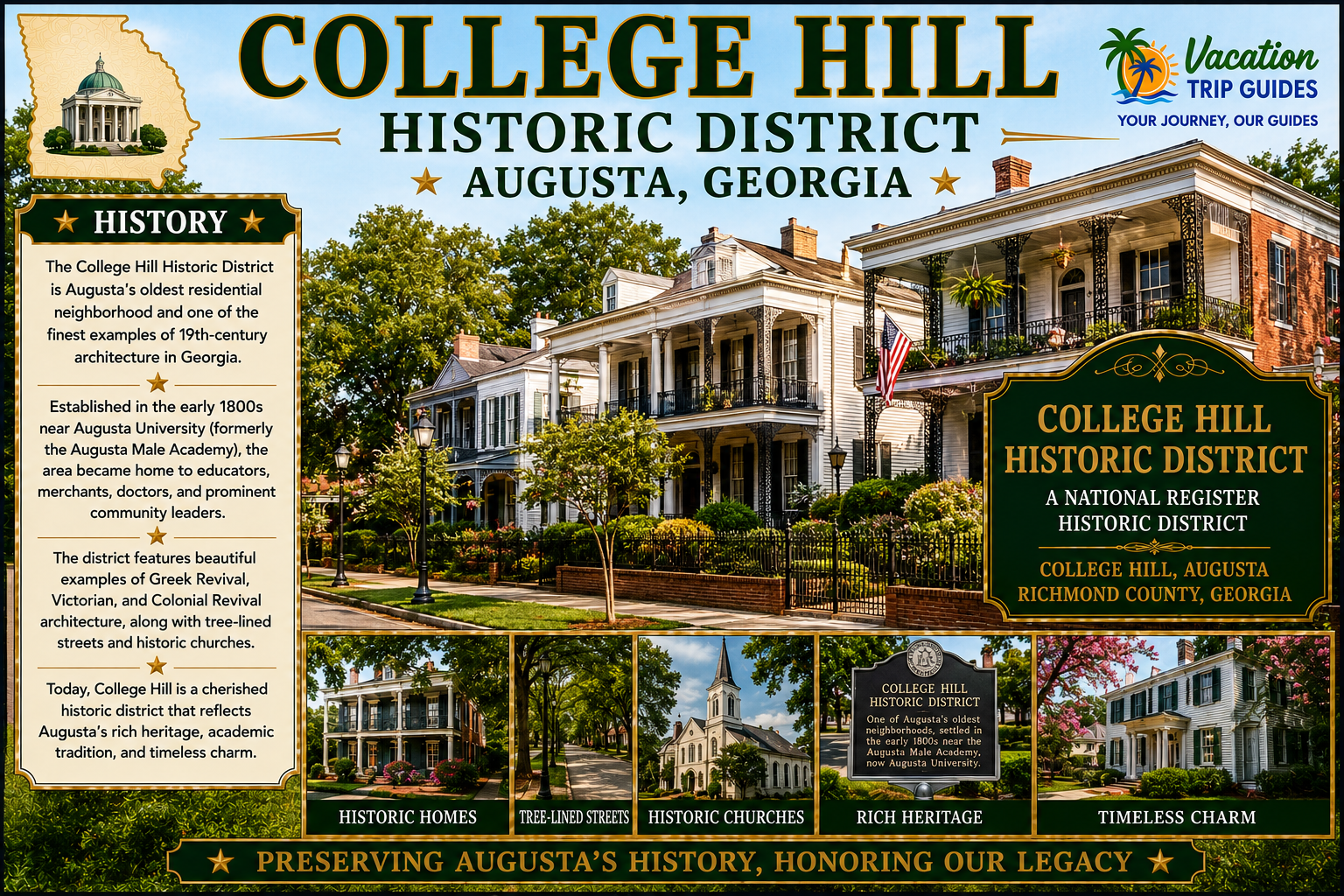
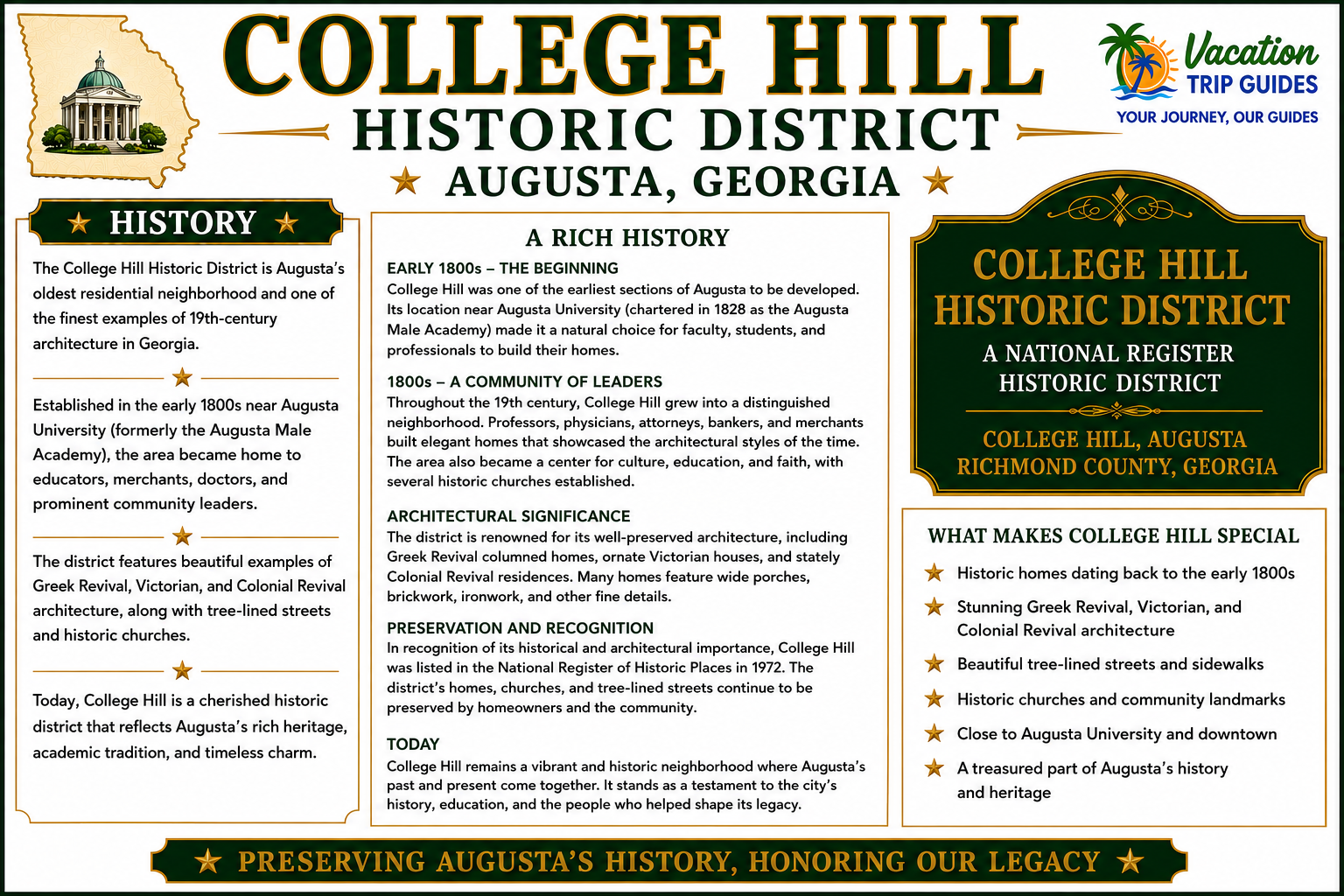
The College Hill Historic District is Augusta’s oldest residential neighborhood and one of the finest examples of 19th-century architecture in Georgia.
Established in the early 1800s near Augusta University (formerly the Augusta Male Academy), the area became home to educators, merchants, doctors, and prominent community leaders.
The district features beautiful examples of Greek Revival, Victorian, and Colonial Revival architecture, along with tree-lined streets and historic churches.
Today, College Hill is a cherished historic district that reflects Augusta’s rich heritage, academic tradition, and timeless charm.
A Rich History
Early 1800s – The Beginning
College Hill was one of the earliest sections of Augusta to be developed. Its location near Augusta University (chartered in 1828 as the Augusta Male Academy) made it a natural choice for faculty, students, and professionals to build their homes.
1800s – A Community of Leaders
Throughout the 19th century, College Hill grew into a distinguished neighborhood. Professors, physicians, attorneys, bankers, and merchants built elegant homes that showcased the architectural styles of the time. The area also became a center for culture, education, and faith, with several historic churches established.
Architectural Significance
The district is renowned for its well-preserved architecture, including Greek Revival columned homes, ornate Victorian houses, and stately Colonial Revival residences. Many homes feature wide porches, brickwork, ironwork, and other fine details.
Preservation and Recognition
In recognition of its historical and architectural importance, College Hill was listed in the National Register of Historic Places in 1972. The district’s homes, churches, and tree-lined streets continue to be preserved by homeowners and the community.
Today
College Hill remains a vibrant and historic neighborhood where Augusta’s past and present come together. It stands as a testament to the city’s history, education, and the people who helped shape its legacy.
College Hill Historic District
A National Register Historic District
College Hill, Augusta
Richmond County, Georgia
What Makes College Hill Special
- Historic homes dating back to the early 1800s.
- Stunning Greek Revival, Victorian, and Colonial Revival architecture.
- Beautiful tree-lined streets and sidewalks.
- Historic churches and community landmarks.
- Close to Augusta University and downtown Augusta.
- A treasured part of Augusta’s history and heritage.
Preserving Augusta’s History, Honoring Our Legacy
Vacation Trip Guides
Your Journey, Our Guides
Color me in
